VGA (DE-15)
VGA (Video Graphics Array) is an analog video display standard introduced by IBM in 1987. The DE-15 connector (commonly called “VGA connector”) transmits analog RGB video signals. While largely superseded by digital interfaces like HDMI and DisplayPort, VGA remains common on projectors, older monitors, and legacy systems. VGA carries video ONLY - a separate cable is needed for audio.
Primary Use
Analog Video Output
Reference Image
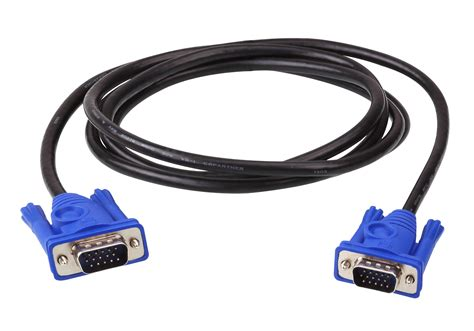
Key Features
- 15-pin D-subminiature connector arranged in 3 rows of 5 pins
- Distinctive blue-colored connector (industry standard color coding)
- Has two thumbscrews on either side to secure the connection
- D-shaped shell prevents incorrect orientation
- Analog signal - susceptible to interference and signal degradation over distance
- Maximum practical resolution around 2048x1536, but quality degrades at higher resolutions
- Video ONLY - does not carry audio
- Still widely found on projectors in classrooms and conference rooms
Variants & Standards
Standard VGA (DE-15)
Mini-VGA
Quick ID Tips
1 BLUE connector - this is the most reliable quick identifier
2 15 pins arranged in 3 rows of 5 (look closely to count rows)
3 Two thumbscrews (one on each side) to secure the cable
4 D-shaped trapezoid housing (wider on one side)
5 Larger than a serial port (which has 9 pins in 2 rows)
6 Often the only blue port on the back of older computers
A+ Exam Notes
VGA is ANALOG - this is the key distinction from HDMI, DVI-D, and DisplayPort which are digital
VGA carries VIDEO ONLY - you need a separate audio cable
The blue color is the fastest way to identify a VGA port on an exam
VGA uses a DE-15 connector (D-subminiature, 15 pins) - do not confuse with DB-25 (parallel) or DE-9 (serial)
Signal quality degrades over longer cable runs due to analog nature
VGA to HDMI adapters require an active converter (analog to digital conversion)
Still relevant for A+ exam as legacy connector knowledge is tested
At a Glance
Display (Legacy)
2
8
7