Fiber Optic Connectors
Fiber optic cables transmit data as pulses of light through thin strands of glass or plastic fiber, rather than electrical signals through copper wire. This makes them immune to electromagnetic interference (EMI), capable of much higher speeds, and able to span much greater distances than copper cables. Fiber optic cables are essential for internet backbone infrastructure, data centers, and high-speed network connections. Several connector types exist, each designed for different applications.
Primary Use
High-Speed Networking & Long-Distance Data Transmission
Reference Image
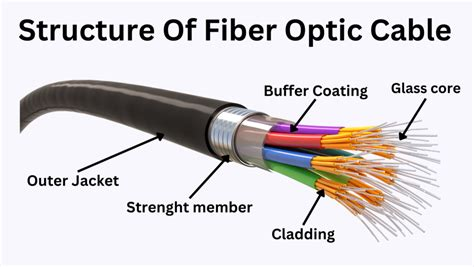
Key Features
- Uses light (photons) instead of electricity (electrons) for data transmission
- Immune to electromagnetic interference (EMI) and radio frequency interference (RFI)
- Much greater distance capability than copper (up to 100+ km for single-mode)
- Higher bandwidth potential than copper cables
- Two main cable types: Single-mode (SMF) and Multi-mode (MMF)
- Single-mode: yellow jacket, smaller core (9 microns), longer distance, laser light
- Multi-mode: orange or aqua jacket, larger core (50-62.5 microns), shorter distance, LED light
- Connectors must be kept extremely clean - even dust can degrade signal quality
- More fragile than copper cables - cannot be bent at sharp angles
Variants & Standards
SC (Subscriber Connector)
ST (Straight Tip)
LC (Lucent Connector)
MT-RJ (Mechanical Transfer Registered Jack)
Single-Mode Fiber (SMF)
Multi-Mode Fiber (MMF)
Quick ID Tips
1 Cable jacket color tells you the type: YELLOW = single-mode, ORANGE = multi-mode (OM1/OM2), AQUA = multi-mode (OM3/OM4)
2 Fiber connectors are visually distinctive - they have a ferrule (thin protruding tip) that houses the fiber
3 SC connectors are square and snap in (Square Connector, Subscriber Connector)
4 ST connectors are round with a bayonet twist-lock (Straight Tip)
5 LC connectors are small and look like a miniature SC (Lucent Connector)
6 Fiber cables are typically thinner and lighter than copper Ethernet cables
A+ Exam Notes
Yellow jacket = Single-mode, Orange jacket = Multi-mode (OM1/OM2), Aqua = Multi-mode (OM3/OM4)
SC = Square push-pull, ST = round twist-lock, LC = small push-pull (half-size SC)
Single-mode = longer distance (WAN), Multi-mode = shorter distance (LAN)
Fiber is immune to EMI - important advantage over copper
Fiber connectors use a ferrule to align the fiber precisely
LC is the most popular connector in modern data centers due to its small size (higher density)
APC (Angled Physical Contact) connectors have a green ferrule - lower signal reflection
UPC (Ultra Physical Contact) connectors have a blue ferrule - standard polish
At a Glance
Networking
6
9
8